

Technical Analysis · LESSON #14 · ~650 words15/22
Ladders
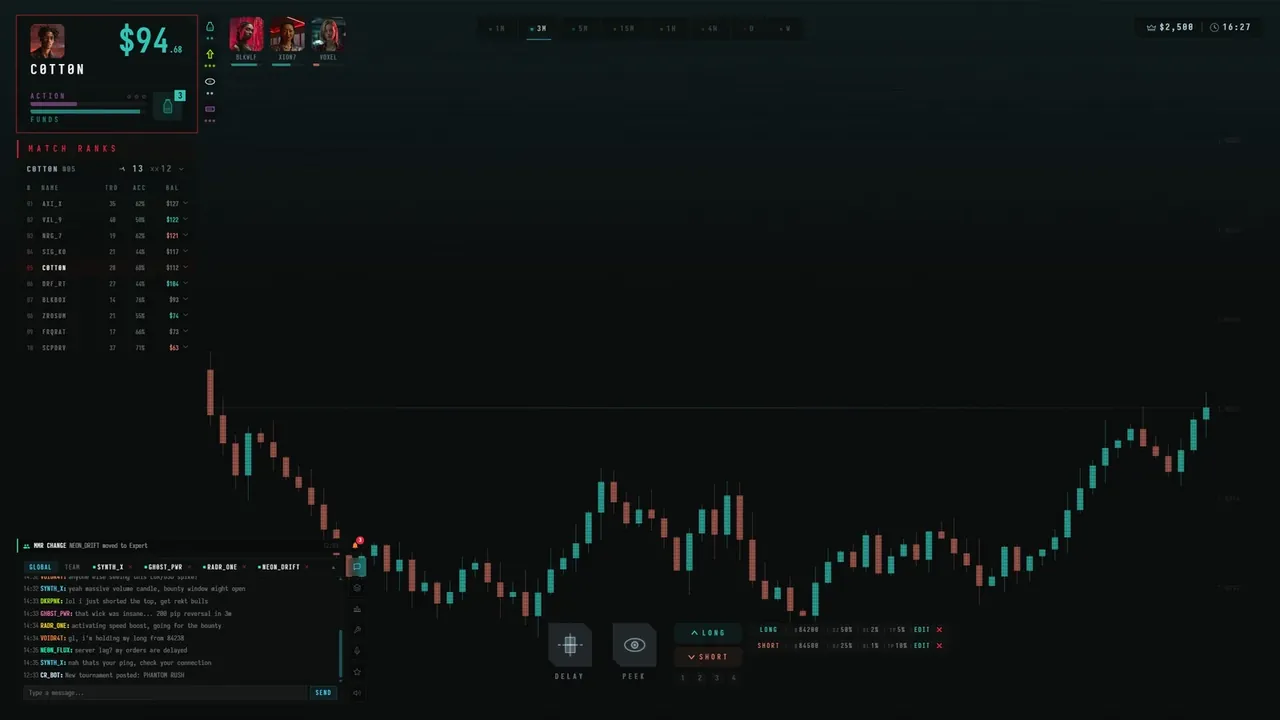
A Ladder is a sequence of wicks: that are progressively stacked in the direction of the current move, with none of the wicks having been moved below on consecutive attempts.
- 3 min read
- 1 definition
- 1 rule
- 2 figures
Lesson Summary
Ladders are all about the wicks of moves on the top and bottoms of your charts. A great way to think of ladder points are the wicks that allow Trends to be created must continue to apply pressure.
Full Transcript
Scroll sideways to see all of it
A Ladder is a sequence of wicks: that are progressively stacked in the direction of the current move, with none of the wicks having been moved below on consecutive attempts. Each wick of the ladder represents a price point that was created as the move progressed and that has not been moved below since. Ladders represent ranges within the current trend. If a move continues to ladder it will continue to move in that direction.
The visual metaphor is precise: a ladder going upward has wicks at progressively higher heights. In a bullish ladder, each successive wick is higher than the last, and none of the lower wicks have been tested from above (which would indicate price came back down through them). As long as all wicks remain untested, the ladder is intact. The moment price wicks below the all ladder points the ladder is broken.
Ladder points are critical because they represent Trends, and Range Trends continuing to hold price in the same direction. A ladder of untested Break Levels above the current price (in a downtrend) means the chart literally cannot reverse upward without first breaking its ladder. This is the structural proof that the move must continue before it can reverse.
When a ladder breaks, when all of the wicks have had price push past them, it has begun testing in a way that suggests direction change. The broken ladder wicks are not deleted; they are adjusted as long as the first master wick that is lower than the rest, and the master wick still remains the lowest wick. The break of a ladder is the first signal that the range may be shifting.
Ladder points are inherently connected to ranges. Each ladder wick defines a local range boundary. The entire staircase structure, wick by wick, maps out the progression of ranges within the larger move. When you view a ladder as a series of Nested Ranges, each wick the top or bottom of one sub-range, you can see exactly how the move is constructing itself: one small range at a time, with each wick representing the boundary of the previous range before it was broken and the next range began.
The relationship between ladder points and Break Levels is what gives ladders their structural significance. Most ladder wicks, at their creation, were a Break Level. Break Levels that have not been tested from the opposing side are actively suppressing any potential reversal. An uptrending chart with multiple untested Break Levels above it on each timeframe is a chart that structurally cannot reverse until those Break Levels are tested. Marking those Break Levels, the ladder wicks, makes this suppression visible.
Once a ladder breaks, the chart is no longer guaranteed to continue in the original direction. The break of a ladder wick triggers a reassessment: are we now in a new range, or is this a temporary violation? The test of the broken wick from the opposite side will determine whether it gains origin status (becomes Polarity) or whether it was a simple Deep Dive. If it achieves origin status, the range has officially shifted. If it remains a Deep Dive, the ladder may reform above the violated wick.
A bullish move has created five ladder rungs: five progressively higher Hold Levels, all untested from above. The chart is in the fifth rung when one of the lower rungs (rung three) is tested from above for the first time. Rung three has been violated. The ladder is broken. Whether the chart can recover and resume the original trajectory depends on whether rung three now becomes an origin level (two independent tests with separation) or whether price re-establishes above it without a second test. The ladder break is the decision point.