


Lesson Summary
The title of this lesson is a metaphor. Climbing a cliff without proper gear is technically possible. Some people make it. Most don't. And the ones who do often don't know exactly why they succeeded, which means they can't reliably repeat it. This lesson is about replacing the cliff with a staircase: building the internal infrastructure that makes consistent performance structural rather than accidental.
Key Rules & Definitions
- Each session should begin with a plan and end with a review. The plan defines entries, exits, and risk parameters before the session opens. The review identifies, specifically and without generalization, what was executed correctly and what wasn't. Patterns in the review point to skills to rebuild. One-off errors don't require systemic changes. Systematic errors do. Documentation is how you tell the difference.
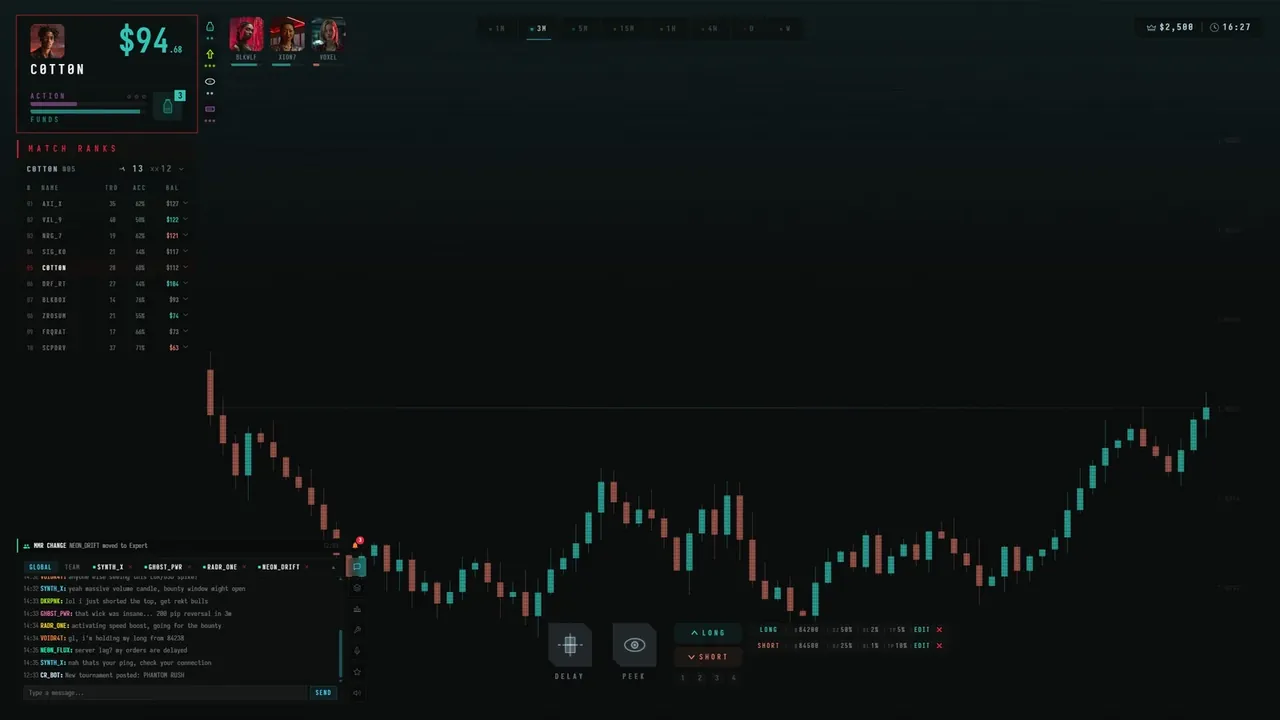
- The external environment, other traders' positions, social media performance, community chat during active sessions, is interference, not information. The moment another trader's position influences your entry or exit, you've mixed their variables into your analysis. The result can't be fully trusted because it's no longer fully yours.
Full Transcript
Carol Dweck spent three decades studying what separates people who improve from people who plateau. Her conclusion wasn't about talent or natural aptitude: it was about the story people tell themselves about those things. A fixed mindset says: "I'm either good at this or I'm not, and failure confirms I'm not." A growth mindset says: "My current ability is a starting point, not a ceiling, and failure is information about where to work." In trading, fixed mindset thinking sounds like: "I always mess up the entry" or "I'm just not cut out for this." Growth mindset thinking sounds like: "I've misidentified this 15-minute level three times this week: that specific skill needs drilling." The first is a verdict. The second is a work order. You can act on a work order.
One of the most persistent self-defeating patterns in developing traders is the self-serving attribution bias. Wins get attributed to skill. Losses get attributed to external factors: the market was weird, the news spiked it, the algorithm hunted the stop. This attribution pattern feels protective in the short term because it preserves self-esteem. But it is catastrophically expensive long-term, because you can only improve what you are willing to own. If every loss belongs to an external force, there is never a skill gap to close, and the same errors repeat indefinitely. The most valuable habit you can build in this discipline is asking: "What structural information did I have that I didn't use, or what structural information did I misread?" That question only works if you're willing to hold the loss as yours.
Kristin Neff's research on self-compassion produced a counterintuitive finding: people who treat themselves harshly after failure don't perform better: they perform worse. The mechanism is straightforward. Self-criticism after a bad trade consumes prefrontal cortex resources that could be used for learning. It also triggers the same threat-response as external danger: elevated cortisol, narrowed attention, impaired risk assessment. The trader who finishes a losing session berating themselves is not preparing for better performance tomorrow. They are arriving at tomorrow's session carrying yesterday's cortisol load. Self-compassion is not the absence of accountability. It is a different kind of accountability: one that identifies the specific error precisely, then returns to baseline so that learning can actually occur.
How you talk to yourself about your trading is the operating system that runs every other skill in this course. Albert Bandura's work on self-efficacy showed that belief in your ability to execute a specific task is both domain-specific and trainable. You don't need global confidence. You need specific confidence at each skill level: "I can identify a Hold Level correctly." "I can find a Combo Level chain." "I can mark an Origin Level the moment it forms." Each skill drilled to fluency builds a specific self-efficacy deposit. Those deposits compound. Over time they produce a generalized belief that you can navigate a chart, because you've demonstrated it, repeatedly, at each individual skill level. You don't build confidence by thinking about trading. You build it by doing the work until the work becomes automatic.
Each session should begin with a plan and end with a review. The plan defines entries, exits, and risk parameters before the session opens. The review identifies specifically, without generalization, what was executed correctly and what was not. Patterns in the review point to specific skills to rebuild. One-off errors do not require systemic changes. Systematic errors do. The only way to distinguish between them is through honest, consistent post-session documentation.
The comparison trap is one of the most reliable destroyers of developing trader confidence. Social media exists to show you the best outcome from everyone else's session simultaneously. Nobody posts their stop-outs. Nobody shows the three hours of choppy indecision before the clean setup appeared. The visual field is saturated with highlight-reel performance, and your brain, which evolved to benchmark against peers, uses that as the baseline. Leon Festinger's social comparison theory explains how this produces either complacency or discouragement, and in trading it almost always produces discouragement, because the comparison pool is systematically filtered for wins. The correct comparison is you versus your documented performance from three months ago. That is the only benchmark that is both accurate and actionable.
Physical state is cognitive state. Matthew Walker's sleep research established that moderate sleep deprivation, six hours instead of eight, produces measurable deficits in prefrontal cortex function, impulse control, emotional regulation, and risk assessment. These are not abstract capabilities. They are the specific faculties required to follow a structured analytical process, hold a trigger discipline, and resist emotional override during a losing trade. Trading on insufficient sleep is not trading with a slight disadvantage. It is trading with a neurologically different brain: one that is more impulsive, less risk-aware, and more susceptible to every error this course has described. The physical preparation for a trading session is not separate from the trading. It is part of it.
The lesson title, Stop Climbing Cliffs, is ultimately about method. Cliffs attract people who want to skip the stairs. The stairs take longer. They require consistency, documentation, drilling, review, rest, and a willingness to own both wins and losses precisely. But stairs compound. Every step taken correctly makes the next step easier. Every skill drilled to fluency removes a variable that used to be decided by guesswork. Every post-session review converts a repeated error into a closed gap. The science in this course is the staircase. Your internal practice is what determines whether you use it correctly, or whether you keep looking for a shortcut up the cliff.