

Logic Flow · LESSON #32 · ~550 words07/14
The importance of RATS
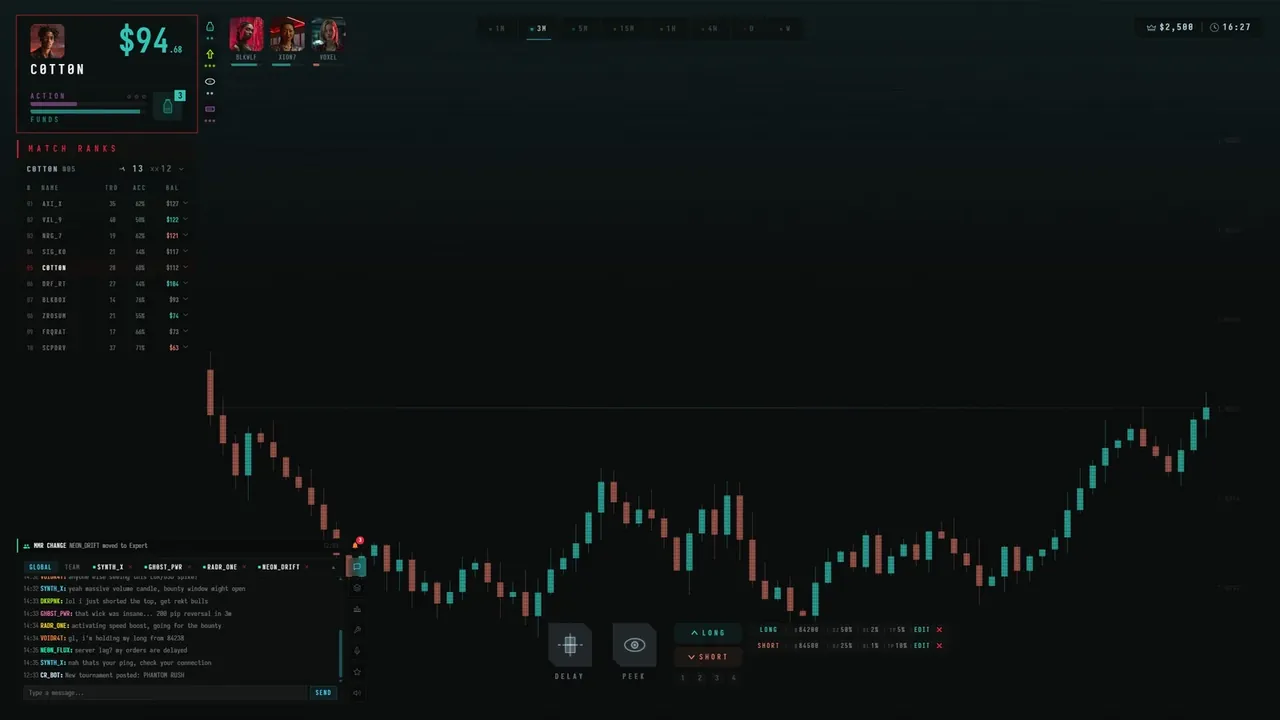
Rejection as Target, as an isolated concept, is straightforward: any Hold Level that you haven't reached yet because you are below it (if the Hold Level is a red candle), or above it (if the Hold Level is a green candle) that has been gained as a Hold Level yet is a RAT.
- 3 min read
- 1 figure
CCTA Terms
Lesson Summary
Rejection as Target, as an isolated concept, is straightforward: any Hold Level that you haven't reached yet because you are below it (if the Hold Level is a red candle), or above it (if the Hold Level is a green candle) that has been gained as a Hold Level yet is a RAT. In active trading, RATs serve as the structural checkpoints that verify whether a move has the structural permission to continue and create timeframe Hold Levels. If a RAT is not gained, the move does not have the structural clearance to proceed past it. This makes RATs not just entry tools but directional confirmation tools.
Full Transcript
Rejection as Target, as an isolated concept, is straightforward: any Hold Level that you haven't reached yet because you are below it (if the Hold Level is a red candle), or above it (if the Hold Level is a green candle) that has been gained as a Hold Level yet is a RAT. In active trading, RATs serve as the structural checkpoints that verify whether a move has the structural permission to continue and create timeframe Hold Levels. If a RAT is not gained, the move does not have the structural clearance to proceed past it. This makes RATs not just entry tools but directional confirmation tools.
When a significant RAT is being approached, the structural question is always: does the chart have what it needs at the smaller timeframes to actually gain this RAT? If the 15-minute RAT is the next target, and there is a five-minute Hold Level between current price and the RAT that has not been gained, the five-minute Hold Level must be gained first. The sequence is nested: gain the smaller timeframe holds to gain the larger timeframe RAT, and gain the larger timeframe RAT to confirm the next level above it is the new target.
Think of a RAT as buying into a Hold Level before it gets created. The benefit would be you get an even better price than the best entry: as the Hold Level in the future becomes the final point, and you got in before that was even created at a better price.
RATs also provide the precise logic for scaling in and out of trades. When a trade has been entered at a lower level and is progressing toward a significant RAT, the RAT is both the natural target and the natural decision point for whether we will continue moving past it to create a Hold Level, or if we will fail and keep moving in the opposite direction. Gaining the RAT is a confirmation signal. Failing to gain the RAT, approaching it and reversing below it without Hard Closing, is a rejection signal. The RAT's behavior at the moment of testing tells you everything about the move's structural health.
At higher timeframes, RATs are particularly significant because the distance to the next RAT is much larger. A four-hour RAT that has never been tested since the beginning of a major move represents a structural ceiling that has been in place for days or weeks. Gaining that RAT is not just one level test: it is the chart demonstrating that it has assembled enough structural permission at every timeframe below it to break through a major structural ceiling. The significance of a four-hour or daily RAT gain is disproportionately large.
The combination of RATs with the +1/-1 framework provides the highest accuracy RAT analysis. When you identify a RAT at the one-hour level (a one-hour hold that has not been tested from above/below), your -1 to that RAT is the 15-minute timeframe. If a 15-minute Hold Level holds just below the one-hour RAT, it is offsetting the one-hour RAT position and confirming that the one-hour move has structural support. The 15-minute hold holding tells you the one-hour RAT will be maintained: the chart will continue using it as a floor rather than attacking it from above.
When multiple RATs at different timeframes are stacked at nearly the same price, the resulting confluence is one of the most significant structural positions on any chart. A five-minute RAT, 15-minute RAT, and one-hour RAT all within a few ticks of the same price represents a level that has never been tested from above at any scale. Gaining such a level, or losing it from above, produces large moves because the chart is simultaneously processing the structural implications at multiple timeframes all at once.