

Logic Flow · LESSON #38 · ~600 words13/14
Removing levels with +1-1
Lesson Summary
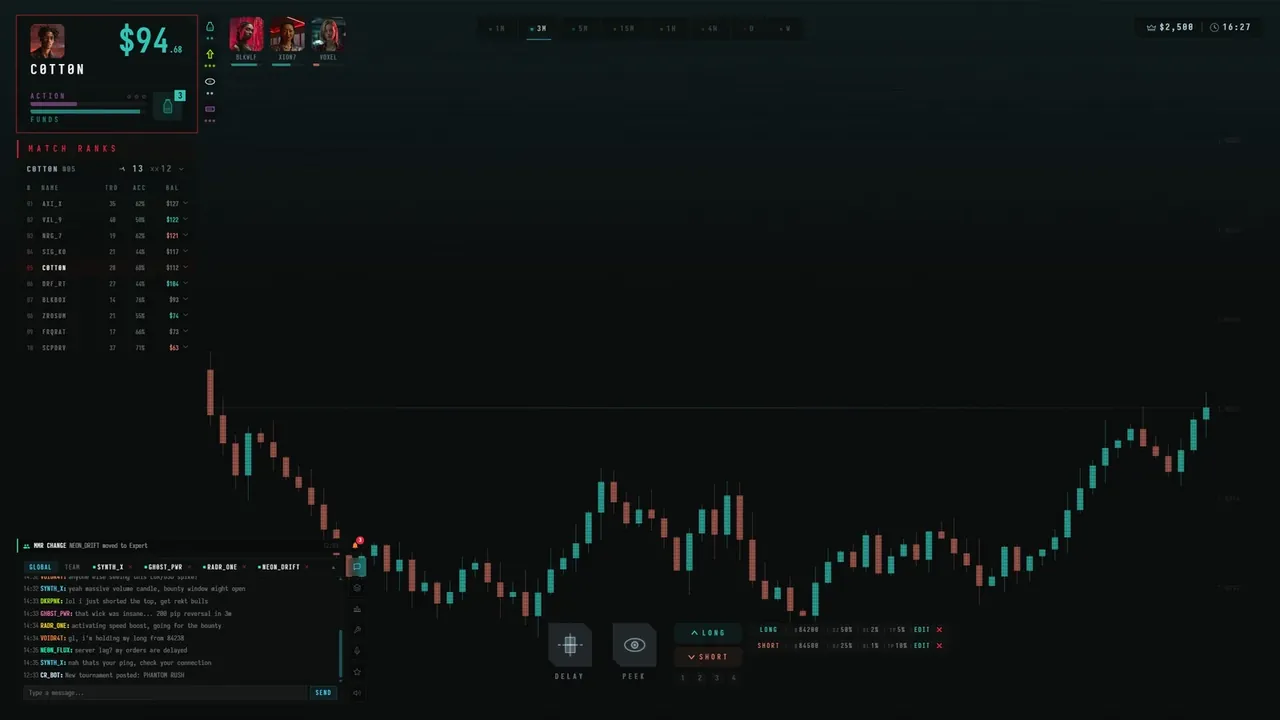
Removing levels is the most important maintenance task we have on our charts. Visual clutter is enemy #1 in this industry: a cluttered screen not only leads to misplacing trading spots but is a complete distraction from logical charting. Once a week I delete every single level on my chart just so it forces me to re-engage with every range.
Full Transcript
Removing levels is an active and continuous process in Logic Flow. The chart that existed before a trade started is not the chart that exists mid-trade. As conditions are met, as levels are tested, as timeframes are gained: the structural picture changes. Levels that were valid entries five minutes ago may now be tested and irrelevant. Levels that were distant targets may now be immediate resistance. Managing this evolution requires systematically removing levels that are no longer active.
The primary trigger for level removal is a test occurring. When a level is tested, body or wick reaching the exact price, confirmed at the lower timeframes, it is removed. Removal on a test is the most straightforward case. A tested level has done its structural work. It either held and created a new structure (in which case the new structure is what matters) or it was broken through (in which case a new level may have been created from the candle that broke it). In either case, the original level is gone from the relevant set.
The second trigger for level removal is when plus-one minus-one analysis reveals that a level is no longer in the structural chain. If the offsetting logic of the current move has moved past a specific timeframe level, if the chart has gained the timeframe that level was supporting, the level below it in the chain no longer has structural relevance to the current move. Remove it. Keeping it creates visual noise that obscures the levels that are actually relevant.
When evaluating whether to remove a level mid-trade using +1/-1: ask whether the level's timeframe is still in the active offsetting chain. If the chart has gained a four-hour level and is now working at the daily level, the 15-minute levels that were protecting the four-hour position are no longer the primary structural concern. They can be removed or archived. The current focus is the four-hour and hourly levels protecting the daily move.
Hard Closes are another trigger for level removal, but only for the specific level that was hard-closed. When a candle Hard Closes a level on its own timeframe, that level is removed and replaced by the body of the closing candle as the new Hold Level at that position. The exchange is one-for-one: the old level out, the new level (defined by the hard close candle body) in. The chart is updated to reflect the new structural reality created by the Hard Close.
Deep Dives, where price goes through a level without Hard Closing, do not trigger removal. The level stays. After a Deep Dive, the level's context changes: it becomes a potential Reverse Level candidate when it receives a second independent test. Mark it with the appropriate notation. Do not remove it prematurely just because price went through it once. Deep-dive levels are some of the highest value future targets precisely because they have been tested once without being Hard Closed.
The goal of continuous level management during a trade is a clean, current chart. A chart cluttered with tested, expired, or structurally irrelevant levels is a chart that will produce confused analysis. The best active-trade charts have only the levels that matter for the next two to three moves. Everything else is removed. Cleanliness of the chart is not aesthetic preference: it is functional accuracy. You can only act on what you can clearly see.